Edinburgh Medicine 2027: UCAT Cut-Off, Entry Requirements & Interview
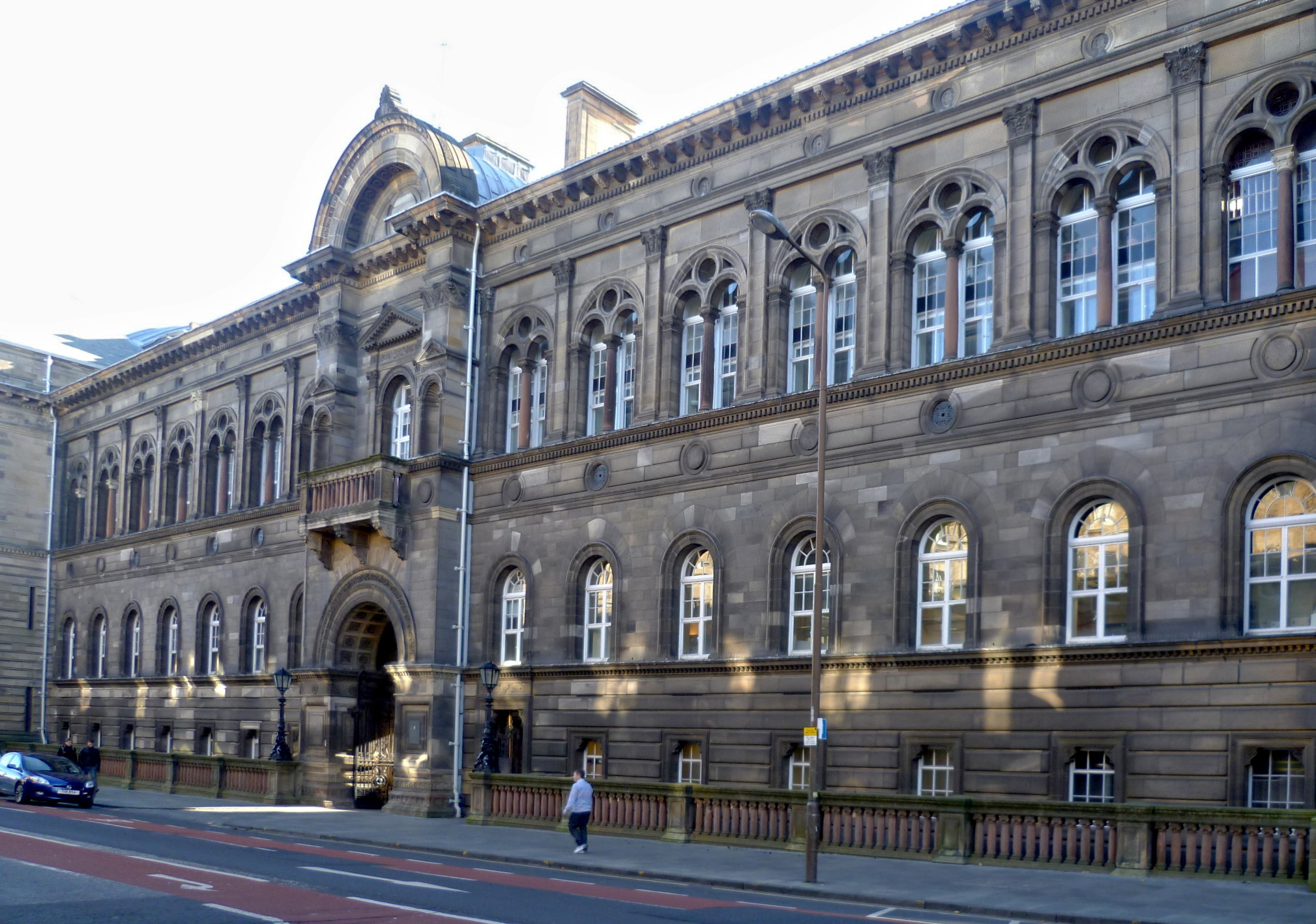
Edinburgh medicine entry requirements for 2027: A-level and GCSE grades, UCAT cut-off and scores, the interview format and example questions, fees and places.
Last reviewed: 14 September 2026 by MedicHut's medical admissions team.
Edinburgh Medicine entry requirements (2027 entry)
Edinburgh Medicine asks for A*AA with the A* in Chemistry, plus grade A in one of Biology/Human Biology/Maths/Physics at A-level, or 40 points overall with 766 at HL (HL Chemistry at 7 plus one other science at 6 or better) in the IB. At GCSE: Strong 7s/8s/9s expected, especially in sciences. 2024 entry average interviewed by fee status: Scottish 2782/3600, RUK 3017/3600, international 3106/3600 (cut-offs 2112 / 2299 / 2574). 2026 predictions: Scottish 2060, RUK 2240, international 2310.
- A-level requirement: A*AA with the A* in Chemistry, plus grade A in one of Biology/Human Biology/Maths/Physics
- Minimum A-levels: A*AA at first sitting - Chemistry essential, resits not accepted
- IB requirement: 40 points overall with 766 at HL (HL Chemistry at 7 plus one other science at 6 or better)
- GCSE requirement: Strong 7s/8s/9s expected, especially in sciences
- UCAS code: A100
- Places: ~205 Scottish/RUK + ~14 Overseas (one of the lowest intakes for the demand)
- Applications per place: ~6.1 applicants per place (2024 cycle: 1,760 applications, 288 places); ~2.3 applicants per interview
- Contextual offers: Reach Scotland + RUK contextual flagging: flagged applicants get extra weighting in the combined score.
- Fees: £9,535/yr Home (Scottish students may be SAAS-funded) - £37,500/yr Overseas Preclinical (years 1-3), £51,000/yr Overseas Clinical (years 4-6)
SJT is used in shortlisting here, so your band sits alongside your other scores when interviews are decided.
SJT is used after interview, combined with your interview score, when offers are ranked.
How Edinburgh uses the UCAT
2024 entry average interviewed by fee status: Scottish 2782/3600, RUK 3017/3600, international 3106/3600 (cut-offs 2112 / 2299 / 2574). 2026 predictions: Scottish 2060, RUK 2240, international 2310.
2024 entry average interviewed by fee status: Scottish 2782/3600, RUK 3017/3600, international 3106/3600 (cut-offs 2112 / 2299 / 2574). 2026 predictions: Scottish 2060, RUK 2240, international 2310.
2024 entry cut-offs (out of 3,600): 2,112 Scottish - 2,299 RUK - 2,574 International. 2026 entry cut-offs (out of 2,700): ~1,560 Scottish - ~1,700 RUK - ~1,900 International.
Edinburgh medicine interview format
Edinburgh does not run a standard interview. Shortlisted applicants are invited to an assessment half day with a series of short interviews, based on the core attributes for medical doctors set out by the Medical Schools Council. Applicants with Scottish and RUK or Republic of Ireland fee status are required to attend in person. Applicants who apply by 15 October 2026 and are invited should get their outcome by the following March. Edinburgh does not publish a station count or timings, so check your invitation. Assessment Days run through the cycle, with outcomes by March 2027
Edinburgh Medicine FAQs
Does Edinburgh Medicine interview applicants?
No - Edinburgh is one of the very few UK medical schools that does not interview. All offers are made on the combined academic + UCAT + personal-statement score.
What UCAT score do I need for Edinburgh Medicine 2027 entry?
There's no published cut-off but the 2025 entry effective threshold was around 2,750. Without an interview to recover ground, push for 2,800+ and a top-decile SJT.
How important is the personal statement at Edinburgh?
Vital - Edinburgh is the ONE place where the PS truly is decision-making. It's scored against a published rubric and feeds directly into your combined score.
Does Edinburgh weight GCSEs heavily?
Yes - more than almost anywhere else. A profile dominated by 7s, 8s and 9s is the expectation, with grade 5/B minimum in English and Maths.
Does Edinburgh accept resit A-levels?
Generally no - Edinburgh expects AAA at first sitting. Resits are considered only with documented mitigating circumstances.
Does Edinburgh accept the IB?
Yes - 37 points overall with 666 at Higher Level including Chemistry.
Can I apply to Edinburgh as an international student?
Yes, but the Overseas intake is tiny (~14 places) and competition is fierce - expect to need a UCAT in the top decile and an academically near-perfect record.
When does Edinburgh issue offers?
From early December on a rolling basis through to March, with the bulk going out January-February.
Does Edinburgh offer Graduate Medicine?
No - only the 6-year undergraduate MBChB.
Does Edinburgh require work experience?
Yes - reflective work experience (clinical or care-based) must be evidenced in your personal statement. Without it, your PS score drops sharply.
Is Edinburgh Medical School good?
Yes - Edinburgh is one of the strongest medical schools in the UK. It was founded in 1726 (the oldest in the English-speaking world), is ranked 22nd in the world for Medicine in the 2025 QS World University Rankings, and consistently sits in the UK top 10 for teaching quality, research output and Foundation Programme allocation. Graduates train across NHS Lothian's teaching hospitals with strong clinical and research exposure.
How do I get into Edinburgh Medical School?
Hit AAA at first sitting including A/A* Chemistry plus a second science, pack your GCSEs with 7s-9s, score 2,750+ on the UCAT with no Band 4 SJT, and write a personal statement mapped to Edinburgh's published rubric (motivation, reflection, work experience, communication, breadth). Because there is NO interview, every component of that written application has to be near-perfect - it's your one shot. Most applicants who miss out lose a single component (UCAT below ~2,700, thin GCSE profile, or a generic PS).
Where is Edinburgh Medical School?
The historic Medical School building sits on Teviot Place in central Edinburgh, five minutes from the main university campus at George Square. Clinical years are taught at the Chancellor's Building on the Little France BioQuarter, alongside the Royal Infirmary of Edinburgh, about 4 miles south of the city centre.
How many students study Medicine at Edinburgh?
Around 1,500 undergraduates plus roughly 250 postgraduate research students study at Edinburgh Medical School at any one time. Each new MBChB cohort has ~205 Home/RUK places and ~14 Overseas places, meaning intake is deliberately kept small relative to demand (application-to-place ratio ~12:1).
Why choose Edinburgh Medical School over other Scottish or UK medical schools?
Three reasons applicants pick Edinburgh: (1) heritage and reputation - the world's oldest English-speaking medical school with elite research output; (2) the compulsory intercalated BMedSci in Year 3, which gives every graduate an honours research degree and a stronger Foundation Programme application; (3) the no-interview model, which suits applicants with elite academics + UCAT + a strong PS but who don't want to be judged on 8 minutes of MMI performance.
Practise the Edinburgh interview
Book a Edinburgh medicine mock interview in the exact format Edinburgh uses, with an interviewer who holds an offer there.
Free Medical School Matcher · 1-to-1 UCAT tutoring · Medicine interview tutoring · All UK medical schools compared · University specific mock interviews · All UK medical school guides