UCLan Medicine 2027: UCAT Cut-Off, Entry Requirements & Interview Questions
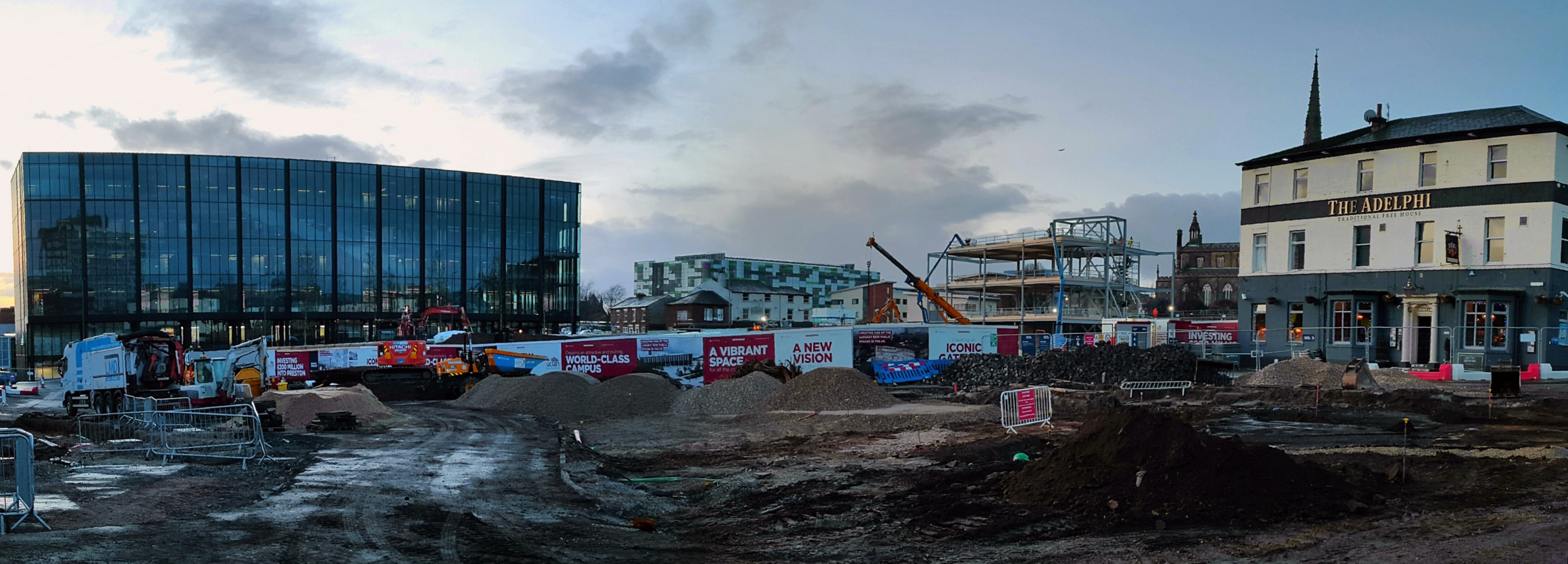
UCLan medicine entry requirements for 2027: A-level and GCSE grades, UCAT cut-off and scores, the interview format and example questions, fees and places.
Last reviewed: 14 September 2026 by MedicHut's medical admissions team.
UCLan / University of Lancashire Medicine entry requirements (2027 entry)
UCLan / University of Lancashire Medicine asks for AAA in at least two science subjects including Chemistry at A-level, or 36 points overall and 144 UCAS tariff points, including Chemistry and another science at Higher Level 6, plus one further subject at H6 in the IB. At GCSE: GCSE Maths and English at grade B/5 or above. All figures below are converted to the 2027 entry scale of 2700 (the old 3600 scale is no longer used). 2025 entry actuals, rescaled: lowest UCAT invited among non-contextual UK applicants 1800 (was 2400/3600), average invited 1910 (was 2545/3600), lowest offer 1733 (was 2310/3600), average offer 2050 (was 2618/3600). Treat 1800 as the minimum that got an invite, not a target: the average invited was around 1910.
- A-level requirement: AAA in at least two science subjects including Chemistry
- Minimum A-levels: AAA at first sitting - Chemistry required plus a second science subject
- IB requirement: 36 points overall and 144 UCAS tariff points, including Chemistry and another science at Higher Level 6, plus one further subject at H6
- GCSE requirement: GCSE Maths and English at grade B/5 or above
- UCAS code: A100 (5-year MBBS)
- Places: ~50 Home + ~80 Overseas (approx 130 total). The programme is unusual in the UK for having a majority-international cohort - most seats are ring-fenced for Overseas fee payers.
- Applications per place: ~7.3 applicants per offer (2025 cycle - 646 Home applications, 89 offers)
- Contextual offers: Contextual admissions: reduced offer (BBB) and relaxed UCAT threshold for eligible Home applicants from Lancashire, Cumbria and other widening-participation flags (POLAR4 Quintile 1, care-experienced, free-school-meals, first-generation-university). Home places are small in number and heavily weighted toward local widening-participation applicants.
- Fees: £9,535/yr Home (under review for 2027) · ~£49,950/yr Overseas (2026/27)
How UCLan / University of Lancashire uses the UCAT
All figures below are converted to the 2027 entry scale of 2700 (the old 3600 scale is no longer used). 2025 entry actuals, rescaled: lowest UCAT invited among non-contextual UK applicants 1800 (was 2400/3600), average invited 1910 (was 2545/3600), lowest offer 1733 (was 2310/3600), average offer 2050 (was 2618/3600). Treat 1800 as the minimum that got an invite, not a target: the average invited was around 1910.
All figures below are converted to the 2027 entry scale of 2700 (the old 3600 scale is no longer used). 2025 entry actuals, rescaled: lowest UCAT invited among non-contextual UK applicants 1800 (was 2400/3600), average invited 1910 (was 2545/3600), lowest offer 1733 (was 2310/3600), average offer 2050 (was 2618/3600). Treat 1800 as the minimum that got an invite, not a target: the average invited was around 1910.
2024 entry average invited 2,597 (range 2,331-2,971, out of 3,600) - 2025 entry lowest non-contextual 2,400, lowest contextual 2,170, average 2,545 (out of 3,600) - 2026 prediction for interview ~1,960 (out of 2,700)
UCLan / University of Lancashire medicine interview format
UCLan describes stage three of its MBBS process as a multi station MMI, usually held between December and April. Applicants interviewing at the Preston campus are sometimes offered a facilities tour on the day. Interviews are held in person, at the Preston campus for UK applicants and at overseas locations for some international applicants. UCLan does not publish a station count or station timings. Check your invitation for current timings. December to April
Sample UCLan / University of Lancashire interview questions
- Why University of Lancashire (UCLan) specifically - what draws you to a small, patient-centred programme in Preston over a larger school like Manchester or Liverpool?
- Tell us about a piece of work experience that changed how you think about the role of a doctor.
- Role-play: a patient has just missed an important test result appointment and is distressed. Support them through the next few minutes.
- Ethics: an elderly patient with capacity refuses a treatment you believe is in their best interest. How do you handle it?
- A fellow student is struggling with the workload and asks to copy your assignment. What do you do?
- Tell us about a time you worked in a team and things went wrong. What did you learn?
- What do you know about health inequalities in Lancashire and coastal Cumbria, and what could a newly qualified doctor realistically do about them?
- Describe a time you received critical feedback. How did you use it?
- Why medicine and not another caring profession such as nursing, physician associate or paramedic?
- What does professionalism mean to a first-year medical student in 2027?
- Tell us about a hobby or interest outside academic study that has made you a better team member.
- The medical school became the University of Lancashire School of Medicine and Dentistry in 2025. Why is a supportive teaching environment and small cohort important to you as a medical student?
UCLan / University of Lancashire Medicine FAQs
Is UCLan / University of Lancashire Medical School good?
Yes - the University of Lancashire School of Medicine and Dentistry (formerly UCLan) is a fully GMC-approved UK medical school that has been graduating doctors since 2019. It runs a small, patient-centred MBBS with strong pastoral support and clinical placements across NHS trusts in Lancashire and Cumbria. It is smaller and less research-intensive than nearby Manchester or Liverpool, but it offers something different: a smaller cohort, earlier and more sustained clinical contact, and a much lower UCAT threshold. It is a strong choice for applicants who value close teaching over rankings and who can meet the international fee level, or Home applicants with local widening-participation flags.
Is UCLan the same as the University of Lancashire?
Yes. The University of Central Lancashire (UCLan) rebranded to the University of Lancashire in July 2025. The medical school is now formally the University of Lancashire School of Medicine and Dentistry - previously the UCLan School of Medicine. The programme, curriculum, campus in Preston and GMC accreditation are unchanged; only the branding changed.
What UCAT score do I need for UCLan / University of Lancashire Medicine?
There is no published cut-off but the 2025 effective threshold sat around 2,300-2,400 total - one of the lowest UCAT thresholds in UK Medicine. UCAT is used as a gate, not a ranked score, so getting above the threshold is what matters. SJT Band 4 is a significant negative and typically ends the application.
What are the University of Lancashire (UCLan) Medicine entry requirements for 2027 entry?
AAB at first sitting including A in Chemistry or Biology plus a second science / Maths, plus a third grade B in any subject (General Studies and Critical Thinking excluded). At GCSE: grade 6+ in English Language, Maths and Sciences. IB: 34 points with 665 at HL, including HL Chemistry or Biology. A valid UCAT is required and applicants must meet a UCAT threshold to be shortlisted. Contextual applicants may be made a BBB offer.
How do I get into UCLan / University of Lancashire Medical School?
Meet the academic requirements (AAB at first sitting with Chemistry or Biology), meet the UCAT threshold (approximately 2,400+ Home in 2025), submit your UCAS application early to be interviewed sooner in the rolling window, and perform strongly across 6-8 values-based MMI stations. The MBBS is unusual for having a majority-international cohort - Home places are small (~50) and heavily weighted toward local widening-participation applicants.
Where is UCLan / University of Lancashire Medical School?
The School of Medicine and Dentistry is based on the University of Lancashire (formerly UCLan) main campus in central Preston, Lancashire. Pre-clinical teaching runs in the Harrington and Darwin buildings on campus. Clinical placements from Year 1 onward run across NHS trusts in Lancashire and Cumbria - Lancashire Teaching Hospitals (Royal Preston Hospital, Chorley), East Lancashire Hospitals (Royal Blackburn), Blackpool Teaching Hospitals and University Hospitals of Morecambe Bay - plus community, GP and mental-health placements.
How many places does UCLan / University of Lancashire Medical School have?
Approximately 130 total places on A100 each cycle - split as roughly 50 Home and 80 Overseas. That international-heavy split is unusual in the UK: at most medical schools Home places dominate. UCLan / University of Lancashire's model is to fund the programme largely through international fees, with a small ring-fenced Home cohort.
Does UCLan / University of Lancashire look at GCSEs?
GCSEs are checked as an eligibility requirement (minimum grade 6 in English Language, Maths and Sciences) but are not numerically scored at shortlisting. A borderline GCSE profile is fine if you meet the minimums; a very strong profile does not give you extra points.
Is the UCLan / University of Lancashire Medicine interview MMI or panel?
MMI - typically 6-8 stations of about 5-7 minutes each. Home applicants are interviewed in person on the Preston campus; international applicants are offered online MMI. Stations are values-based: motivation, communication, ethics, teamwork, reflection, role-play and an information-gathering station. No academic knowledge is tested.
Does UCLan / University of Lancashire have contextual offers for Medicine?
Yes. Home applicants from Lancashire and Cumbria widening-participation postcodes, POLAR4 Quintile 1, care-experienced students, free-school-meal recipients and first-generation-university applicants can receive a reduced BBB offer and a relaxed UCAT threshold. Home places are small in number and heavily weighted toward local widening-participation applicants.
How much does UCLan / University of Lancashire Medicine cost?
For 2026 entry Home fees are £9,535/yr (under review for 2027) and Overseas fees are approximately £46,000/yr, expected to rise ~3% for 2027. International applicants who apply via an overseas partner network may see additional partner / agent fees on top - always check directly with the University before committing.
Does UCLan / University of Lancashire offer Graduate Entry Medicine?
No - there is no stand-alone 4-year graduate-entry MBBS. Graduates apply through the standard 5-year A100 route and must meet the same AAB (or contextual BBB) profile plus UCAT.
Does UCLan / University of Lancashire accept resit A-levels for Medicine?
Standard applicants are expected to achieve AAB at first sitting. Resits are considered only where there are documented mitigating circumstances submitted with your UCAS reference. Applicants with resits and no accepted mitigation are typically not shortlisted.
Can I apply to UCLan / University of Lancashire as an international student?
Yes - and international places make up the majority of the intake (~80 of ~130). Expect AAB including Chemistry or Biology at first sitting, a UCAT meeting the threshold (~2,400+), and a strong online MMI. Fees for 2026/27 are approximately £46,000/yr. International applicants can apply direct to the University after the UCAS deadline, subject to places remaining, and many apply via overseas partner networks in the Gulf and South-East Asia.
Why choose UCLan / University of Lancashire Medical School over Manchester, Liverpool, Lancaster or Edge Hill?
Three reasons applicants pick it: (1) a much lower UCAT threshold - realistically the most accessible North-West medical school on UCAT for applicants with a strong academic record; (2) a small cohort with early, sustained clinical exposure from Year 1 and strong pastoral support - not the anonymity of a large city school; (3) it is one of the very few UK medical schools where international fee-paying applicants can realistically access ~80 seats. It is not the choice for research-heavy careers or a large-city student experience - Manchester, Liverpool and Lancaster are better fits there.
Practise the UCLan / University of Lancashire interview
Book a UCLan / University of Lancashire medicine mock interview in the exact format UCLan / University of Lancashire uses, with an interviewer who holds an offer there.
Free Medical School Matcher · 1-to-1 UCAT tutoring · Medicine interview tutoring · All UK medical schools compared · University specific mock interviews · All UK medical school guides